Unknown Pictures? 7 Clues Hidden in Your Family Photos (and What They Reveal)
*This post may have affiliate links, which means I may receive commissions if you choose to purchase through links I provide (at no extra cost to you). All opinions remain my own
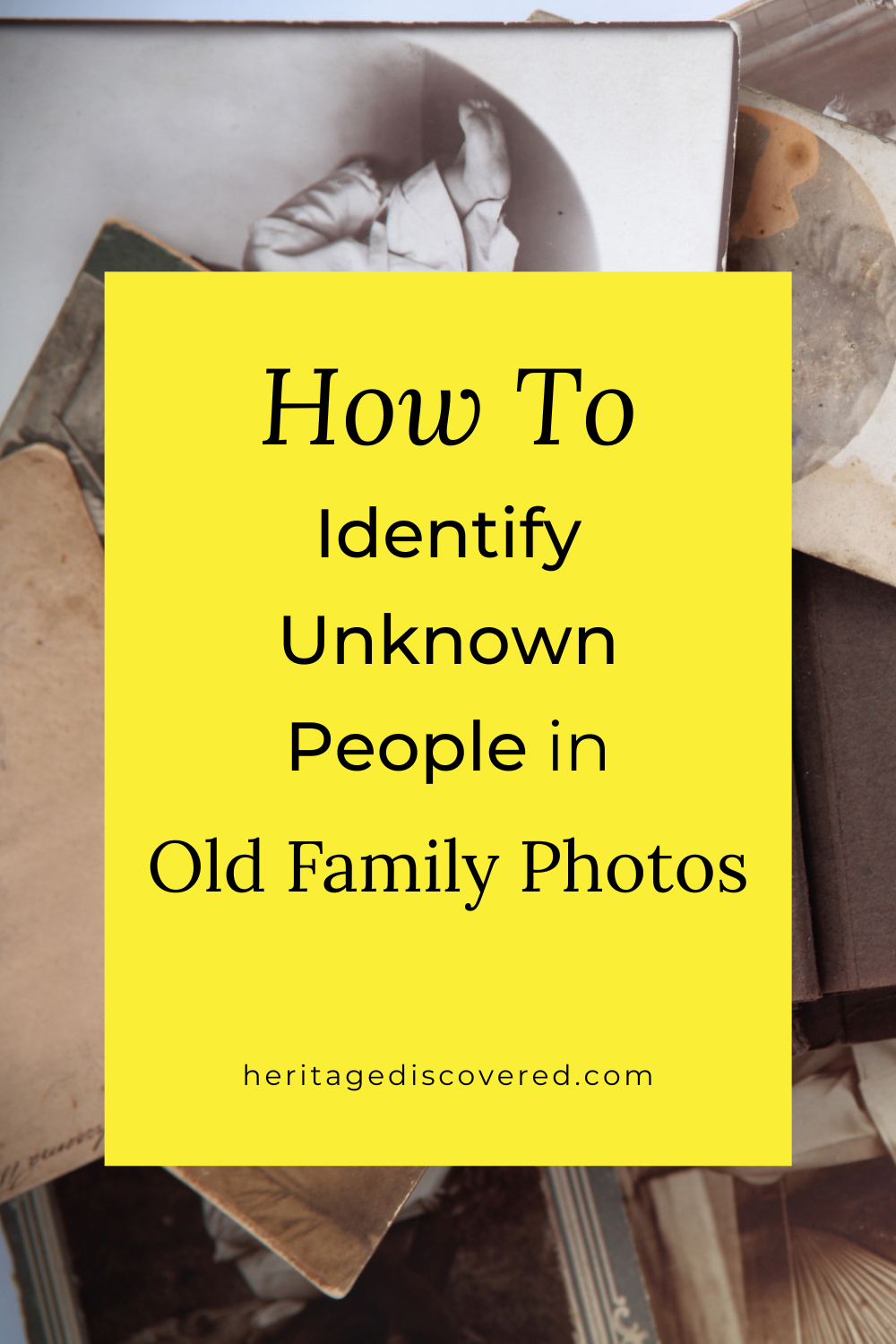
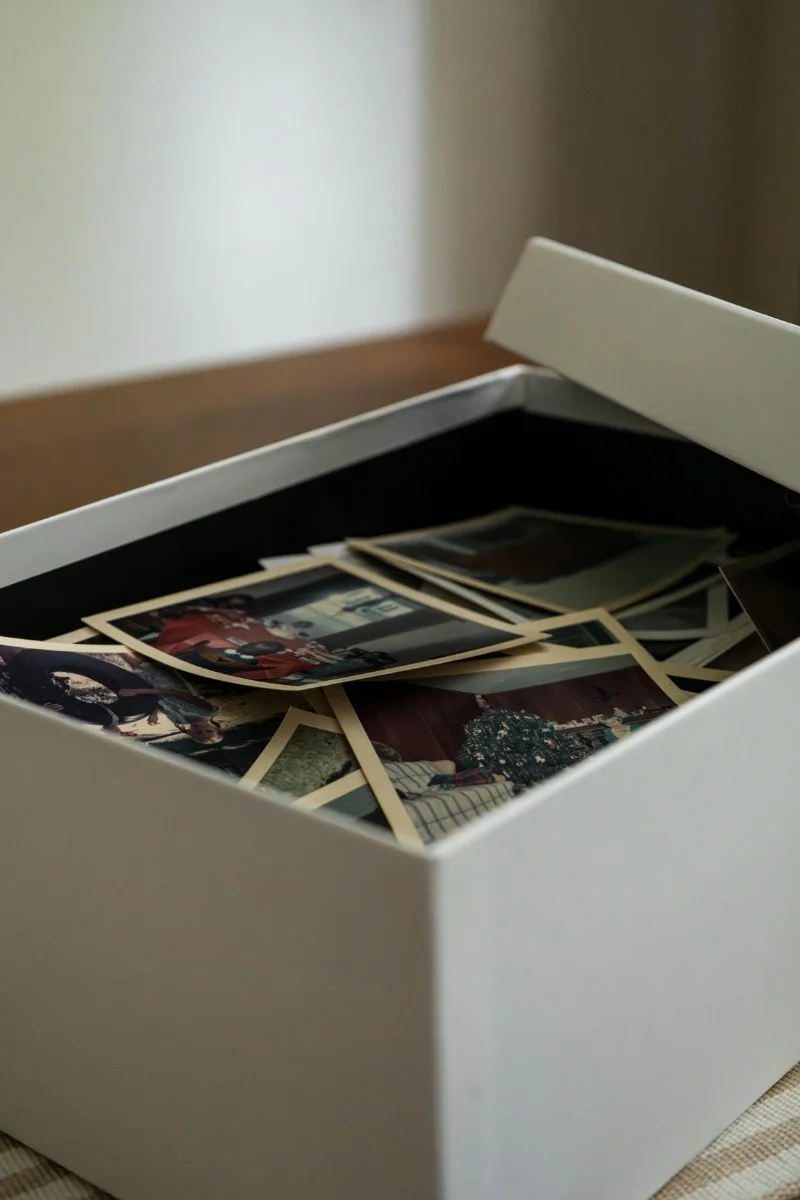
I still remember sitting on the floor with a box of old family photos spread out around me.
Some were labeled. Most weren’t.
And then there was a small stack that I kept coming back to. Faces I didn’t recognize. No names. No dates. Nothing helpful written on the back (don’t you love that?).
At the time, I almost set them aside.
Because what can you really do with unknown pictures?
But here’s what I’ve learned after years of research. Unknown pictures are not dead ends. They’re clues.
And sometimes, they’re the clues that move your research forward when nothing else will.
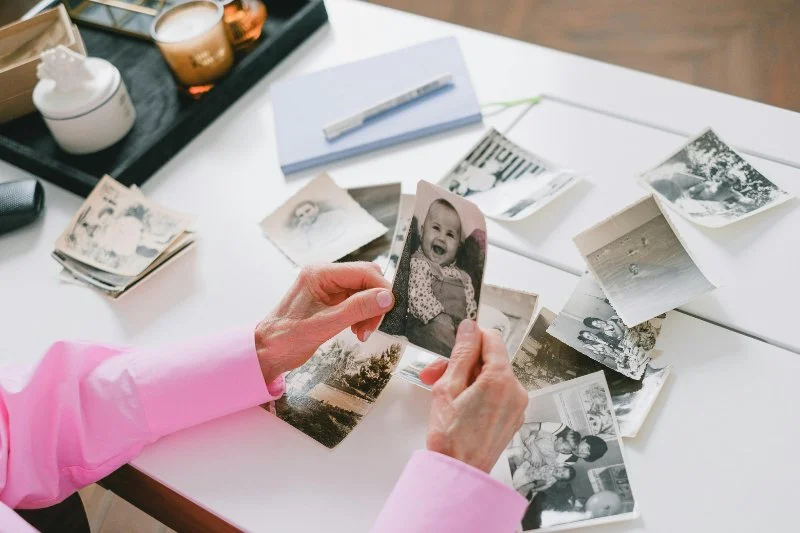
So if you’ve got a pile of unknown pictures or old family photos sitting in a box somewhere, here are 7 ways I start pulling information out of them.
First, A Quick Introduction
If we haven’t met yet, I’m Jessica, a professional genealogist with 20 years of personal research experience and over 5 years working with clients. I help people uncover their family stories, especially when they feel stuck, overwhelmed, or unsure what to do next.
If you’re looking at your own stack of unknown pictures and thinking, “I have no idea where to even start,” you don’t have to figure it out on your own.
You can book a free 20-minute consultation with me, and we’ll talk through what you have and what your next step could look like. Whether you want to keep researching yourself or have me dig in for you, I’ll help you get clear on a plan.
Look Beyond the Faces: Why Unknown Pictures Still Matter
It’s easy to focus on one thing.
“I don’t know who this is.”
But that’s only one piece of the puzzle.
Even when you’re working with unknown people in pictures, you can still learn:
When the photo was taken
Where it might have been taken
Who they might be connected to
And how it fits into your family history
And once you start pulling those pieces together, the picture (literally) starts to change.
Start With What You Know (and What You Don’t)
Before you analyze anything, pause for a second.
Ask yourself:
Where did these unknown photos come from?
Which side of the family do they likely belong to?
Were they in an album, envelope, or loose in a box?
Even a small detail like “this came from my grandmother’s things” gives you a starting point.
And just as important, note what you don’t know yet. That keeps you focused on what you’re trying to figure out.
Clue #1: Clothing and Hairstyles Can Reveal Time Periods
This is always one of the first things I look at.
Clothing styles changed over time. So did hairstyles.
You don’t need to be an expert in fashion history. You just need to notice patterns.
For example:
High collars and long dresses often point to the late 1800s
Shorter hairstyles for women became more common in the 1920s
Men’s suit styles and facial hair can narrow things down, too
Is it exact? No.
But it can help you place your unidentified photos within a range of years, which is a big step forward.
Clue #2: Photo Types and Formats Matter More Than You Think
The type of photo you’re looking at can tell you a lot.
Some common ones you might see in old family photos:
Tintypes (often small, on thin metal)
Cabinet cards (mounted on thick cardstock, popular in the late 1800s)
Carte de visite (smaller mounted photos from the mid to late 1800s)
Each format had its own time period.
So if you can identify the type, you can narrow down when the photo was likely taken.
And that immediately helps you limit who it could be in your family tree.
Clue #3: Backgrounds, Buildings, and Locations
Next, I look past the people.
What’s behind them?
Backgrounds in unknown pictures can give you clues like:
A studio backdrop versus a real location
A farmhouse, city street, or specific building
Landscape features like mountains, water, or farmland
Sometimes, I’ve been able to connect a photo to a location just by comparing it to other family history photos or known places my ancestors lived.
Even small details matter here.
Clue #4: Photo Studios, Labels, and Hidden Writing
Flip the photo over. Then look again.
And then look closer.
Because some of the most helpful clues to identify people in photos are easy to miss:
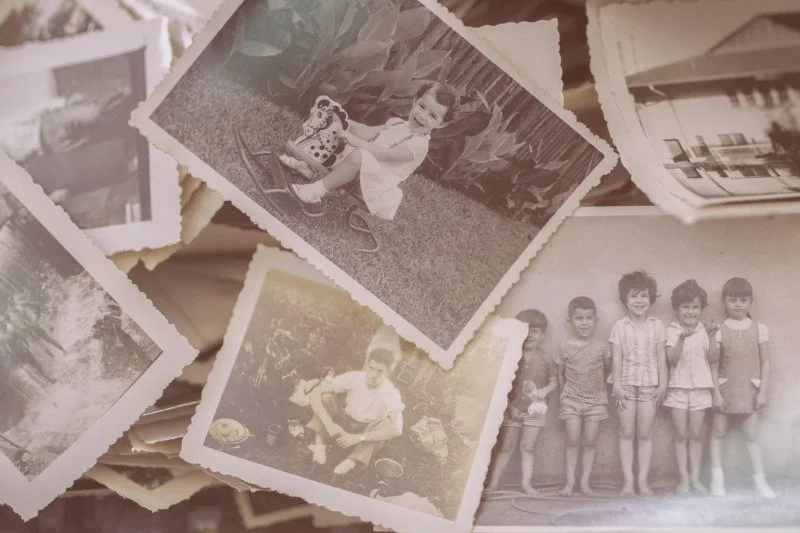
Studio names and locations printed on the front or back
Faded pencil notes
Imprints along the edges
A studio name alone can narrow your search to a specific town or region.
From there, you can start asking:
Did my ancestors live there? Travel there? Have connections there?
This is one of those clues that can quietly unlock a lot.
Clue #5: Who They’re Standing Next To
This is where things get really interesting.
When you’re working with unknown pictures, don’t just focus on one person.
Look at the group.
Ask:
Are there multiple people in the photo?
Do any of them appear in other photos I recognize?
Are there family groupings (parents, children, siblings)?
This ties into something I use all the time in research.
Looking at friends, associates, and neighbors. In genealogy, we call it the FAN Club.
And yes, it works with photos too.
If you can identify even one person in a photo, you may be able to figure out who the others are based on their connection.
Clue #6: Repeated Faces Across Your Collection
This one takes a little more time, but it’s worth it.
Start comparing your pictures of unknown people to other photos you already have.
Look for:
Similar facial features
The same person appearing at different ages
Repeated groupings
I’ve had moments where I didn’t recognize someone at first, but after seeing them in multiple photos, it clicked.
Patterns show up when you give yourself time to notice them.
Let’s recap the clues on how to identify people in photos so far using a picture of my grandmother.
I know that the woman on the right in this unlabeled photo is my grandmother. I know she had two siblings, but I have no clear, identified photos of their faces.
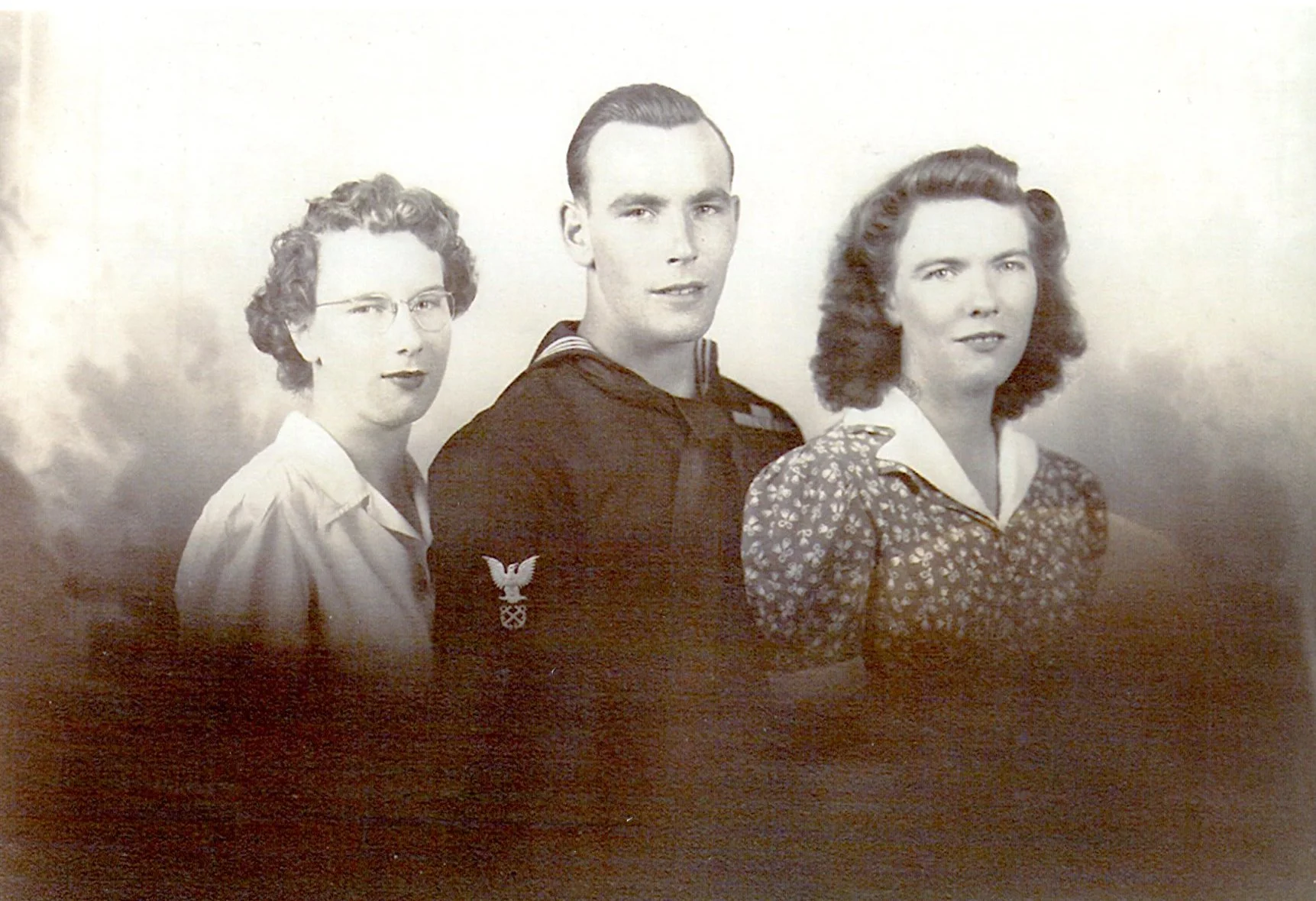
But judging by the family resemblance and similar ages, I can make a solid assumption these are her brother and sister.
Because I know her brother served in World War II and he’s in uniform, I can also narrow down the timeframe of when the photo was taken. My grandmother’s hairstyle also looks like a victory roll to me, further placing it in the 1940s.
Looking at the background, it’s definitely a studio backdrop. The studio wasn’t identified, but I can make a safe guess it was in Greenfield, Massachusetts where two of the three kids lived at the time.
I don’t know the back story behind this picture, but the siblings got together to have their photos professionally taken, possibly before Albert went off to war.
I actually used this clear, closeup picture to identify other, less clear, pictures of her siblings in the small pile of family photos that I have.
Clue #7: Connect Photos to Records and Timelines
This is where everything starts to come together.
Once you’ve gathered clues from your unknown pictures, don’t stop there.
Bring in your records.
Look at:
Marriage records
Timelines of their lives
If you’ve narrowed a photo down to a certain time period and place, you can start matching it to real people in your tree.
This is exactly why I love using timelines in research.
When you lay out everything you know about an ancestor’s life in one place, gaps and connections become much easier to see.
If you don’t already have a system for that, the Ancestor Timeline and Complete Family Story Organizer was designed for this kind of work. It keeps your photos, notes, and records all in one place so you can actually see how everything connects.
How to Organize and Track What You Find
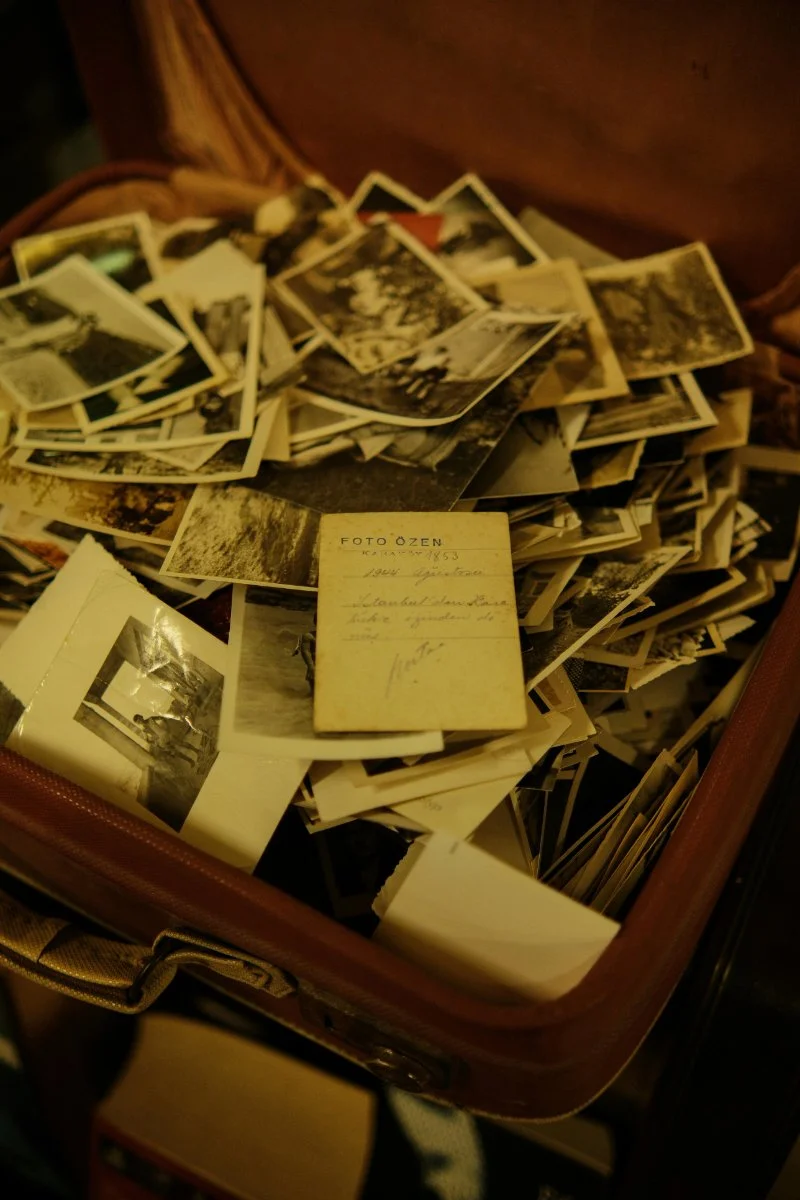
Once you start analyzing unidentified family photos, things can get messy fast.
Notes everywhere. Ideas floating around. Clues you don’t want to forget.
So keep it simple.
Here’s what I do:
Write down every clue I notice (even if it seems small)
Keep photos grouped by where they came from
Track possible identities instead of trying to “solve” it immediately
Revisit them later with fresh eyes
Having a place to store all of this makes a huge difference.
Again, this is where something like the Complete Family Story Organizer can really help you stay on top of your research instead of losing track of it.
When Your Photos Aren’t Enough
Sometimes, even after all this, you still won’t have a clear answer.
That’s normal.
Because here’s the truth. Most genealogy records aren’t online.
A lot of the information you need to identify people in unknown pictures is sitting in:
Things like:
Local records
Photo collections
Unpublished materials
Reaching out to archives can feel like a big step, but it’s often where the real breakthroughs happen.
If you’re planning to go that route, having a checklist makes it a lot easier. That’s exactly why I created Archive Ace, to help you prepare so you don’t waste time or miss opportunities.
And if you’d rather not navigate that process on your own, this is also something I can help with. Whether it’s a few focused hours or a deeper research project, I offer done-for-you research to help you move forward.
Your Next Step
If you’ve got a stack of unknown pictures sitting somewhere, don’t wait.
Pull out just one.
Start with that.
Look at it a little closer than you have before.
You don’t need to figure everything out today.
You just need to take the next step.
And if you’re not sure where to start or feel stuck, you can always book a free 20-minute consultation with me. We’ll talk through what you have and map out a plan to move your research forward.
Because those unknown photos are not as unknown as they seem.