Best DNA Tests for Ancestry: Which One Should You Choose?
*This post may have affiliate links, which means I may receive commissions if you choose to purchase through links I provide (at no extra cost to you). All opinions remain my own.
The first time I took a DNA test, I refreshed the results page more times than I’d like to admit. I wanted answers immediately. Where were my ancestors from? Would I finally figure out some family mysteries? Would this magically solve my brick walls?
Spoiler alert: DNA testing is incredibly useful for genealogy research, but it’s not magic. The best DNA tests can open doors, connect you with cousins, and point you toward new records. But DNA alone rarely tells the whole story.
Before we dive in, hi, I’m Jessica. I’m a professional genealogist with 20 years of personal research experience and over five years helping clients uncover their family history. I specialize in Hawaii, New England, and French Canadian genealogy research. If you’re feeling overwhelmed by DNA matches, confused about which company to choose, or stuck trying to turn results into actual discoveries, I’d love to help. You can schedule a free 20-minute consultation or explore my research services for one-on-one support.
What DNA Testing Can (and Can’t) Tell You About Your Family History
One of the biggest misconceptions about the best DNA tests is that they’ll instantly hand you a complete family tree. I wish it worked that way.
DNA testing can help you:
Find biological relatives
Connect with living cousins
Confirm family relationships
Suggest ethnic origins
Point toward migration patterns
Support traditional genealogy research
But DNA testing can’t:
Automatically identify every ancestor
Replace records research
Guarantee ethnicity percentages are exact
Solve every brick wall on its own
Tell you your complete family story
Think of DNA like a flashlight. It illuminates areas of your family history you may not have noticed before, but you still need records, archives, newspapers, and careful analysis to understand what you’re seeing.
And that’s where the real stories usually appear.
Some of my favorite discoveries didn’t come directly from DNA at all. DNA simply pointed me toward the right family or cluster of people. The records did the rest.
The Different Types of DNA Tests Explained Simply
Before choosing among the best DNA kits, it helps to understand what kind of test you’re actually taking.
Autosomal DNA Tests
This is what companies like AncestryDNA, MyHeritage, and 23andMe primarily offer.
These tests:
- look at DNA inherited from both parents
- connect you with cousins across many family lines
- work best for genealogy research within about 5 to 7 generations
For most people researching family history, autosomal testing is the best place to start.
Y-DNA Tests
These tests follow the direct paternal line:
father to son
grandfather to father
surname research
Only biological males can take Y-DNA tests directly. My dad took the Big-Y test for fun and thought the results were interesting, but neither of us have dug deep into the results yet.
These are especially useful for:
surname projects
proving paternal relationships
deeper direct-line research
Mitochondrial DNA Tests
These follow the direct maternal line:
mother to child
grandmother to mother
Both men and women inherit mitochondrial DNA, but only women pass it on.
These tests are usually more specialized and less useful for everyday genealogy beginners.
I took one a couple of years ago out of curiosity. Because my mother is Asian and fewer test takers tend to be Asian, I have literally two matches. If you take an mt-DNA test, you’ll probably have more matches than I do, but don’t be surprised if you don’t have as many as autosomal, or even Y-DNA tests.
For most readers trying to decide between the best DNA tests for ancestry, autosomal testing is likely what you want first.
AncestryDNA vs MyHeritage vs Others: Key Differences
This is where things get interesting because the “best” DNA kit really depends on your goals.
AncestryDNA
For most U.S. and Canadian genealogy research, I usually recommend AncestryDNA first.
Why?
largest DNA database
strong family tree integration
excellent record collections
useful shared match tools
huge cousin network
If your goal is building a family tree, finding cousins, or identifying common ancestors, AncestryDNA is often one of the best DNA tests to start with.
Especially for:
New England research
French Canadian genealogy
U.S. immigrant ancestors
unknown parentage cases

MyHeritage DNA
MyHeritage has a smaller database than AncestryDNA, but it shines in some important ways.
It’s especially useful for:
international matches
European genealogy research
immigrant ancestry
users researching outside the United States
I’ve seen MyHeritage become incredibly valuable for clients with Eastern European, Jewish, and overseas connections.
23andMe
23andMe leans more heavily into health reporting and ethnicity estimates.
This was actually the first DNA test I ever took, many years ago. While it doesn’t give you as many results as other testing companies, I have found cousin matches here that haven’t tested on the other sites.
It’s useful if you:
- want health insights
- are curious about traits
- want another cousin database
But for pure genealogy research, many family historians eventually pair it with another platform.
FamilyTreeDNA
FamilyTreeDNA is more specialized.
It’s especially helpful for:
Y-DNA testing
surname studies
advanced lineage projects
FTDNA not usually my first recommendation for genealogy beginners, but it absolutely has its place.
Which DNA Test Is Best for Your Specific Research Goal
This is really the better question.
The best DNA tests depend on what you’re trying to learn.
| Your Goal | Best DNA Test | Why It Helps |
|---|---|---|
| Beginner family history research | AncestryDNA | Largest database and strong family tree integration make it easier to start building connections. |
| Finding unknown parents or grandparents | AncestryDNA first, then upload to MyHeritage, FamilyTreeDNA, and GEDmatch | More databases mean more cousin matches and better odds of identifying close relatives. |
| International or immigrant ancestry | MyHeritage | Strong international user base and useful overseas DNA matches. |
| Health insights and traits | 23andMe | Includes health and trait reporting alongside ethnicity estimates and cousin matching. |
| Direct paternal surname research | FamilyTreeDNA Y-DNA | Tracks the direct paternal line and works well for surname studies. |
| French Canadian genealogy research | AncestryDNA | Large North American testing pool makes cousin matching especially useful for French Canadian lines. |
One thing I want to stress: ethnicity estimates alone should not be the main reason you choose a company.
Ethnicity estimates change constantly as databases improve. They’re useful clues, not final answers.
As an example, several years ago, one of the companies updated their estimates and suggested many users were way more Scottish than the reality. I have one Scottish ancestor, many generations away, and it said I was something like 25% Scottish.
At the time of this writing, Ancestry is saying I have 11% Quebec ancestry and 32% Irish. In reality, I have more like 40% Quebec ancestry and 5% Irish. However, it did nail that I have 50% ancestry from the Ryukyu Islands (Okinawa).
As I said, the estimates are useful clues that can guide your traditional genealogy research, but aren’t the full pictures.
How to Avoid Common DNA Testing Mistakes
I see the same mistakes over and over again in genealogy research.
Treating ethnicity estimates like proof
Those percentages are estimates. They shift over time.
Focus more on:
match networks
shared ancestors
records connections
Ignoring records
DNA without records often leads to frustration.
The best DNA tests work best alongside:
And many of those records still aren’t digitized. Archives remain essential for serious genealogy research.
Not organizing your findings
Once DNA matches pile up, things get messy fast (ask me how I know). On my dad’s side alone, I currently have over 30,000 matches.
This is where tools really help.
My Genealogy Records Workbook is great for tracking which records you already checked and which ones you still need.
And the Ancestor Timeline helps organize overlapping events, especially when sorting out multiple people with the same name.
What to Do After You Get Your Results
This is where many people stall out.
They take one of the autosomal DNA tests, glance at the ethnicity estimate, maybe message one cousin… then stop.
But your real work starts after the results arrive.
Here’s what I recommend you do next:
Build or expand your family tree
Review your closest matches first
Study shared matches
Compare locations and surnames
Look for migration patterns
Search newspapers and obituaries
Create timelines
Track theories carefully
I’ve written more detailed guides on:
Those posts walk through the next steps in much more detail.
If you prefer more personalized guidance, my my 1:1 research service is a great option. I can review your DNA matches together, sort through confusing connections, and use the results to solve your family history questions.
How to Turn DNA Matches Into Real Genealogy Discoveries
Here’s the part many people underestimate.
DNA matches are clues. Not conclusions.
You still need to turn those clues into evidence.
That often means:
researching entire family groups
comparing records
analyzing newspaper articles
tracing migration paths
studying neighbors and associates (AKA FAN Club research)
Newspapers are especially valuable here.
I can’t tell you how many times a tiny obituary or local newspaper mention helped connect a DNA match to the correct family branch.
My Newspaper Nuggets worksheet was designed specifically for this kind of analysis because newspaper articles are packed with clues people often overlook the first time they read them.
And if you’re struggling to organize all your theories and evidence, the Brick Wall Breakthrough Blueprint helps break complicated genealogy problems into manageable steps.
When DNA Isn’t Enough (and You Need Records)
Sometimes DNA simply points you toward a question.
The records answer it.
This is especially true for:
proving parentage
identifying immigrant hometowns
researching women before marriage
confirming relationships before civil registration
separating people with the same name
And this is where archives matter so much.
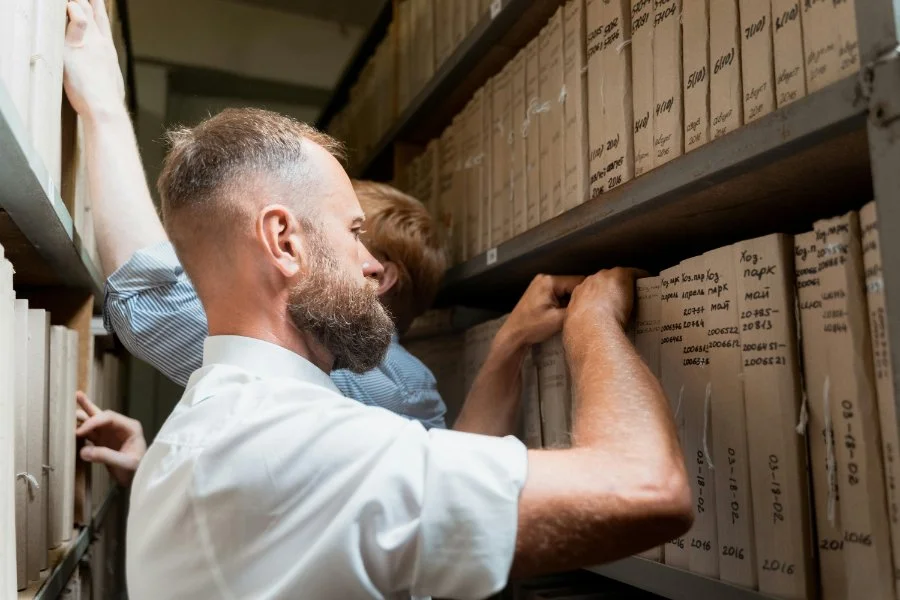
Only a small percentage of genealogy records are online. Many of the most valuable records still live in:
courthouse basements
church repositories
historical societies
university collections
Some of the most important discoveries in my own research came from records that weren’t digitized at all.
DNA can absolutely help you narrow your search. But records provide the context, proof, and stories that bring your ancestors to life.
If you’ve taken one of the best DNA tests and still feel stuck, you don’t have to figure it all out alone. I offer:
free 20-minute consultations to help you decide your next step
Whether you’re trying to identify a mystery ancestor, untangle DNA matches, or finally move forward on a brick wall, I’d love to help you continue your research.