Quebec Genealogy Tips: How to Read Quebec Church Records (Even If You Don't Speak French)
*This post may have affiliate links, which means I may receive commissions if you choose to purchase through links I provide (at no extra cost to you). All opinions remain my own.
The first time I opened a French Canadian parish record, I remember thinking, There's no way I'm going to figure this out.
The page was packed with flowing handwriting and just enough unfamliar French words to make me wonder if I was looking at the right record at all. I could recognize a few names, but everything else felt completely out of reach.
If you've had that same feeling, I want you to know something.
You don't need to be fluent in French to make real progress with Quebec genealogy.
In fact, most Quebec church records follow such a consistent format that after you've read enough of them, you'll start recognizing patterns before you understand every word. Once you know what you're looking for, those intimidating pages become much easier to work through.
That's exactly what I'll show you in this guide.
Hi, I'm Jessica, a professional genealogist specializing in Quebec genealogy, New England, and Hawaii. I help people uncover the stories of their ancestors, whether that means finding the right archive, translating difficult records, or breaking through frustrating brick walls. If you'd rather have someone tackle your French Canadian research for you (or you simply aren't sure where to begin), I'd love to chat. I offer a free 20-minute consultation along with personalized research services.
Why Church Records Are the Backbone of Quebec Genealogy
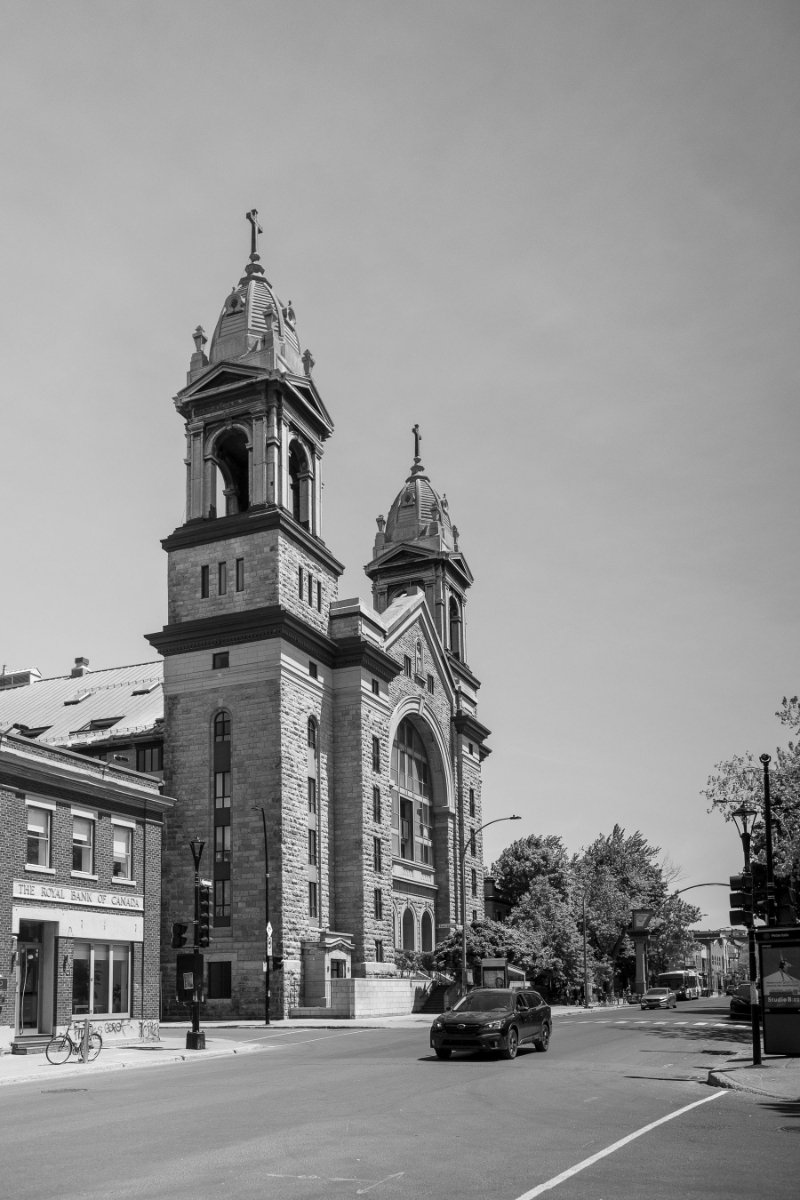
If your ancestors lived in Quebec before civil registration became the primary record keeper, church records are often your best source of information.
Catholic priests recorded baptbaptismssms, marriages, and burials for generations. Those records usually include much more than just dates.
You might find:
Parents' names
Witnesses and godparents
Places of residence
Occupations
Previous spouses
Relationships between family members
Those extra details are often the clues that separate two people with the same name or help identify the correct family when several lived in the same parish.
One thing I love about Quebec genealogy is how complete many parish registers are. When families stayed in the same community for generations, or even if they moved around, it's often possible to follow them through baptisms, marriages, and burials across decades.
That said, just because a record exists doesn't mean it's easy to find. Digitized collections can be incomplete, poorly indexed, or filed under a different name, place, or spelling than you expect. If a search comes up empty, don't assume the record isn't there. If you'd rather save yourself the time (and sometimes the language barrier), that's something I regularly help clients with.
The Basic Structure Every Catholic Parish Record Follows
Here's some good news.
Most Quebec Catholic church records aren't random paragraphs. They're formulaic.
Priests followed established templates.
While wording changed a little over time, most records include familiar pieces of information.
Baptisms
You'll usually find:
Date of baptism
Child's name
Date of birth (but not always)
Father's name and occupation
Mother's maiden name
Residence
Godparents
Priest's signature
Marriages
Quebec marriage records often include even more information.
Look for:
Bride and groom
The groom’s occupation
Parents of each
Whether a parent was deceased
Place of residence
Witnesses
Marriage dispensations (if applicable)
Your ancestor’s signature (if they could sign their name)
Burials
Burial entries commonly include:
Name of the deceased
Date of burial
Date of death (sometimes)
Age
Spouse or parents
Residence
Once you know where each piece of information usually appears, you can skim a page much faster. Even if every sentence isn't perfectly clear, you'll know where to look for the details that matter most.
Learning to read Quebec church records is only the beginning. These 9 Essential French Canadian Genealogy Books will help you understand Quebec history, parish records, and the resources that can take your research even further.
Key French Genealogy Words You'll See Over and Over
You don't need a French dictionary beside you every time you research.
Honestly, I find that learning a relatively small vocabulary goes a long way.
Some of the words you'll see repeatedly include:
né — born
née — born (female)
baptême — baptism
mariage — marriage
sépulture or inhumation — burial
époux — husband
épouse — wife
fils de — son of
fille de — daughter of
veuf — widower
veuve — widow
paroisse — parish
témoins — witnesses
Rather than translating every single word every time, I recommend creating your own locality guide that includes commonly used words, record collections, archive links, maps, and research notes for each parish you're studying.
That's exactly why I created the Locality Research Navigator. Instead of hunting for the same resources over and over, you can keep everything about a locality in one organized place, making your genealogy research much easier as your project grows.
How to Handle Latin Entries in Older Records
Just when you start getting comfortable with French, you may run into Latin.
Don't panic.
Many older Catholic records use Latin for names, dates, and standard phrases.
Some common examples include:
Joannes = Jean or John
Josephus = Joseph
Maria = Marie
filius = son
filia = daughter
uxor = wife
The structure of the record usually stays familiar even when the language changes.
Names are often Latinized, but they're still recognizable once you've seen them a few times.
When working with Latin records, it often helps to identify the names first, then the relationships, and finally the dates. Once those key details are clear, you can decide whether the rest of the entry contains information that's relevant to your research.
This approach is usually much more efficient than trying to translate every word from the beginning.
Common Handwriting Quirks That Trip Up Beginners
Sometimes the language isn't the biggest challenge.
The handwriting is.
Older priests often had beautiful handwriting (at least they probably thought so), but it isn't always easy for modern researchers to read, especially the further back in time you go.
A few things that commonly cause problems include:
Long flourishes that make letters blend together.
Abbreviations used over and over.
Letters that look almost identical.
Capital letters that don't resemble modern handwriting.
Inconsistent spelling of surnames.
One mistake I see people make is assuming every spelling difference means a different family.
It often doesn't.
Spelling wasn't standardized, and priests usually wrote names the way they heard them. It's completely normal to find several spellings for the same surname in Quebec church records, sometimes even in the same record.
When in doubt, compare the parents, spouse, witnesses, FAN Club, and location before deciding they're different people.
Free Tools and Translation Shortcuts That Actually Help
You don't need expensive software to begin reading Quebec church records.
Here are a few tools I regularly recommend:
DeepL for natural French translations.
Google Translate for quick word lookups.
WordReference when a French word has several meanings.
FamilySearch's Genealogical Word Lists for French and Latin genealogy terms.
Online handwriting guides for French paleography.
One shortcut I use all the time is copying repeated phrases into a document as I translate them.
After you've translated the same marriage wording ten or twenty times, you'll rarely need to do it again.
Your own reference guide becomes one of your most valuable research tools.
Mistakes to Avoid When You Don't Read French
There are a few traps that can slow down your Quebec genealogy research.
Try to avoid these:
Translating every word before looking at the overall structure.
Thinking every unfamiliar word is important.
Ignoring witnesses and godparents (they were often relatives).
Treating spelling differences as different families.
Assuming indexes are always accurate. They're incredibly helpful, but they can contain transcription errors.
Believing a different surname means a different family. French Canadian ancestors often used nom dit ("known as") names, meaning the same person could appear under a surname, a nom dit, or both in different records. I have an entire guide on understanding nom dit names if you'd like to dive deeper.
Most importantly, don't let the language stop you.
Every experienced researcher started somewhere. I certainly did.
Keep Moving Forward With Your Quebec Genealogy
The more Quebec church records you read, the more familiar they'll become. Before long, you'll recognize names, phrases, and record layouts almost without thinking.
And if you reach a point where you've exhausted what you can do on your own, remember that a record existing online doesn't mean it's easy to find. Indexes can miss entries, names can be spelled differently than you expect, and sometimes records are best browsed page by page rather than searching by name. A record you can't find isn't necessarily a record that doesn't exist.
If you need someone to research those records, request copies, or continue your Quebec genealogy research for you, I'd be happy to help.
If you're tackling French Canadian ancestry research yourself, my Locality Research Navigator can help you organize your parish research, archive information, maps, and record collections all in one place. And if you'd rather have an experienced genealogist dig into the records for you, I offer personalized research packages and a free 20-minute consultation to help you decide on the next best step.
Reading Quebec church records gets easier with practice. Every page teaches you something new, and every record brings you one step closer to understanding your family's story.